A Queen bed measures 152 centimetres across—a full 61 centimetres wider than a Single. That extra width feels like a luxury on paper, but in a typical 4-room BTO master bedroom, it often gets whittled down to a personal shoulder-width allowance of about 90cm. That’s the trap. You’re not just buying a bed; you’re buying the real estate your body occupies during the night, and for a side sleeper, that’s non-negotiable territory.
Think about the mechanics. When you lie on your side, your shoulder needs to sink into the mattress, not press against a hard edge or your partner’s back. A Queen might technically fit two people, but subtract the space each person naturally claims, and you’re left with a narrow strip. Your shoulder hits the side rail, or you unconsciously curl inward to avoid contact. That compression doesn’t just disturb sleep; it creates a pressure point that can lead to morning stiffness and pain.
The 15-centimetre jump from a Super Single to a Queen is often sold as the upgrade for couples. For a side sleeper, it’s the bare minimum for solo rotation. You need that margin to shift position without negotiation, to roll from your left side to your right without waking up your partner or bracing against the wall. In a room where the bed is pushed against a wall to save floor space, that margin vanishes entirely. Your sleeping side becomes permanently fixed, and the pressure never gets a chance to redistribute.
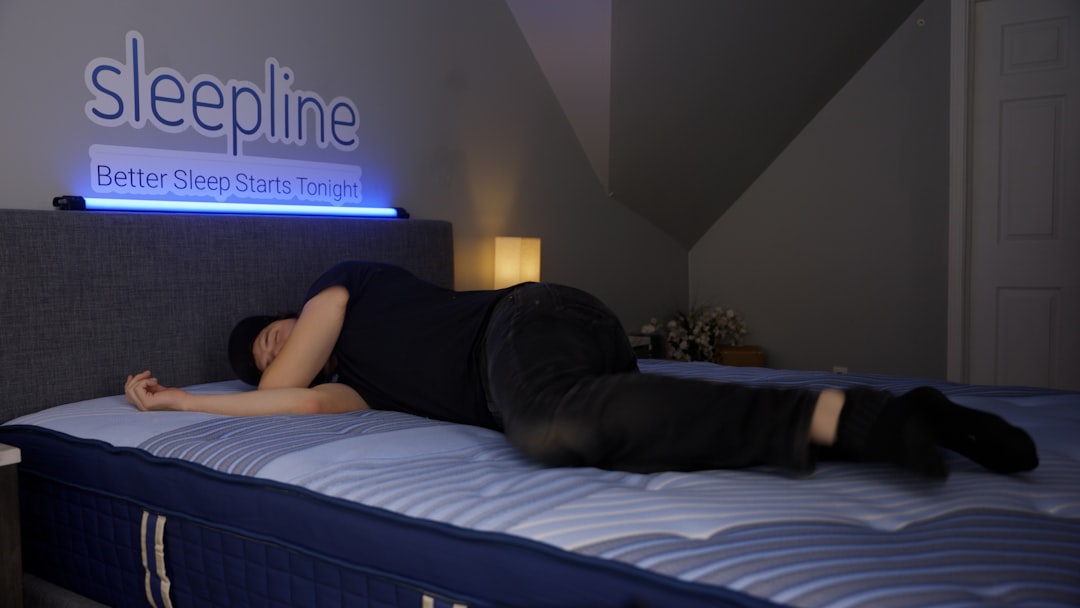
There’s really only one scenario where a Queen is sufficient for two side sleepers: if both of you are exceptionally still sleepers who never move. For everyone else, especially pregnant women advised to sleep on their left side or anyone experiencing shoulder ache, that extra width isn’t a luxury—it’s a functional requirement for pain-free rest. The layout of your room might dictate the maximum size you can accommodate, but within those constraints, prioritise the width your shoulders actually need over the footprint the bed merely takes up.
A Queen bed already takes up most of a 12 sqm common bedroom. A King, at around 182cm wide, pushes the frame flush against at least one wall, sometimes two. That’s where the trouble starts for side sleepers. You need space to roll over naturally, without contorting your spine or dragging your hips across the mattress edge. When you’re wedged against a wall, that simple movement becomes a twist-and-shove manoeuvre that puts pressure right on the joints you’re trying to protect.
Think about the nightly routine. A side sleeper with hip pain will shift position multiple times. In a cramped layout, you can’t just swing your legs out and push off—you’re forced to do a kind of awkward crab-walk on the mattress, using your shoulders and knees to pivot. That torque defeats the whole purpose of a pressure-relieving mattress designed for side sleeping. The medium-soft comfort layers that cradle your shoulders become irrelevant when your pelvis is kinking just to get comfortable.
The functional layout matters more than the centimetres of sleeping surface. You should have at least 60cm of clear floor on the side you exit from, and a good 30cm on the other. In many resale HDB bedrooms, a King obliterates that. You’ll end up with a glorious, sprawling centrepiece that you have to climb over from the footboard, turning every midnight bathroom trip into a balancing act. That’s not restful; it’s a hazard.
So here’s the verdict: for side sleepers in compact spaces, prioritise accessible perimeter space over raw mattress width. A Queen gives you that crucial walkway. The only real exception is if your bedroom is a true master bedroom, say in a newer BTO where you’ve got a full 3.5 metres to play with. Then a King can work—but even then, measure twice. Because if you’re buying a mattress to ease hip pain, the last thing you need is a bedroom layout that makes moving around a chore.
A mattress for side sleepers must fit the room's dimensions. Queen size mattresses at 152x190cm suit most HDB and BTO master bedrooms. Leave about 60cm clearance on one side for easy movement and access. For smaller common bedrooms, a Super Single at 107x190cm might be the better choice.
Investing in a proper mattress for side sleepers is a long-term health consideration. Budget for a mattress with quality materials that provide adequate pressure relief and support. While initial cost may be higher, durable construction means better value over years of use. Browse the options to find a balance between features and affordability.
East-facing bedrooms get a strong dose of morning light, which can warm up a mattress surface considerably before you even wake up. That heat interacts directly with medium-soft memory foam, making it feel more pliable and responsive to your shoulder's pressure points during those early hours. In a Super Single, where you're likely sleeping alone and the foam's entire surface is exposed, this thermal effect is uniform and can actually enhance the contouring you need. But sustained exposure without good air circulation can lead to the foam holding that warmth deeper into the day, altering its recovery time. It's a subtle shift, but one that means the foam in an east-facing room performs differently from the moment you lie down compared to a cooler, shaded space. Testing a mattress in a cool showroom won't reveal this daily thermal cycle.
North-facing condos or rooms with limited cross-ventilation create a stagnant air environment where humidity lingers. Foam doesn't breathe like natural fibres; it traps that moist air within its structure, especially in thicker comfort layers designed for side sleepers. Over weeks, this can lead to a slight densification of the material, making it feel marginally firmer than it did on day one. That's counterproductive for pressure relief, as the foam becomes less willing to cradle your shoulder joint deeply. In a Super Single tucked into a tight corner of a 4-room BTO, airflow around the bed is often minimal, compounding the issue. You won't notice this in a well-ventilated retail space, which is why climate context is critical.
Memory foam is temperature-sensitive, and Singapore's ambient humidity around 80% plus acts like a constant, gentle thermal blanket on the material. This means the foam's advertised "slow sink" and "hug" can become exaggerated, sometimes feeling almost too slow to rebound when you shift positions at night. For a side sleeper seeking that perfect balance between sink and support, the local climate pushes the material toward the sink end of the spectrum. In a spacious, air-conditioned master bedroom, you might manage this, but in a common bedroom with a Super Single, the effect is more pronounced. It's a non-obvious point: the foam's performance is inherently tied to the room's microclimate, not just its lab specs.

Lying on a mattress for five minutes in a cool, dry showroom tells you almost nothing about how it will behave in your actual bedroom. You must apply your full body weight in your typical sleeping position—side sleeping, with your hips and shoulders pressing down—and stay there long enough to feel the foam's gradual response. Watch how it contours around your shoulder; does it stop sinking at the right depth to keep your spine aligned? That's the real test, and skipping it because you're rushed is a mistake. The showroom environment is a controlled, neutral baseline, but your home isn't. Your weight and posture are the only constants you can judge against the variable of your room's conditions.
Given the humidity, your choice should lean toward foams that are specifically engineered for tropical stability, even if they're marketed as medium-soft. These often have a slightly faster recovery time or a more open cell structure to resist that damp, heavy feeling. There's one exception: if your bedroom is consistently air-conditioned throughout the night, the climate factor diminishes significantly, and you can focus purely on the foam's pressure-relief properties. But for the majority of flats relying on natural ventilation or fans, the material's response to our environment is the first consideration, not the second. Ignoring it means you might buy a mattress that feels perfect in Tampines but disappoints in your north-facing room.
A Queen mattress is the usual compromise for a couple in a 4-room BTO, but compromise shouldn’t mean shoulder pain. You’ll find the answer lies in the top layer’s softness, not the mattress size. That’s why you need to test it properly—lying on your side for minutes, not just sitting on the edge.
Most people give a mattress a quick bounce and a five-second lie-down. That’s useless for a side sleeper. Your shoulder needs to sink into a softer comfort layer to relieve pressure, but your hip shouldn’t plunge so deep your spine curves. The only way to know is to commit. Find a quiet corner in the showroom, lie fully on your side, and stay there. Count to sixty, then a hundred. Feel whether the initial softness still supports you or if you’re slowly sinking into a trough.
Bring your partner. It’s not about romance; it’s about physics. When they lie beside you, the mattress dips differently. A Queen might feel fine solo, but with two bodies, the support zones shift. You’ll see if your shoulder still gets its cushion or if you’re now rolling towards the centre. This shared-space test is the real one—the mattress you buy isn’t for a solo night in a hotel.
There’s a counterintuitive point here: a softer top layer often feels better on a larger mattress. On a King, the extra width means your hip is less likely to hit a firmer edge zone. But the principle stays the same. You test for the cushioning, not the centimetres. If the pressure relief isn’t there on a Queen, a King won’t fix it.
The exception is if you’re strictly a solo sleeper. Then you can focus purely on your own shoulder’s comfort, without the partner variable. But for most, that shared test is non-negotiable. Don’t skip it just because it feels awkward in a public showroom. Awkward now beats sore shoulders every morning for years.
Is a medium-firm mattress bad for side sleepers?
It’s not automatically bad, but it’s rarely the best choice. Side sleepers need that softer top layer to cradle the shoulder and hip, letting the body sink in just enough to keep the spine straight. A true medium-firm often lacks that initial softness, so your pressure points don’t get the relief they need. The exception is if you’re a heavier person—then a medium-firm base with a thick, soft comfort layer can work, because you’ll still get the contouring without sinking too deep.
Can a 3-room BTO master bedroom fit a King?
It can, but you’ll be living with it, not just sleeping on it. A King is around 182cm wide, and a typical BTO master is maybe 3.5 by 3 metres. You’ll have to sacrifice other furniture—maybe no bedside tables, or a dresser shoved into a corner. The real question is whether you want that squeeze. For side sleepers who move around a lot, a Queen gives you space to stretch without feeling boxed in, and that’s worth considering.
Will latex sleep cooler than memory foam in Singapore?
Yes, generally. Latex has a more open structure that doesn’t trap heat like traditional memory foam can. In our humidity, that difference is noticeable—you’re less likely to feel that stuck-in-the-sun feeling. But newer memory foams with gel infusions or open-cell designs also aim to solve the heat issue. So if you prefer the deep contour of memory foam, look specifically for those cooler variants.
Is shoulder pain a sign my mattress is too hard or too soft?
Usually it’s too hard. A hard surface won’t let your shoulder sink in, so it gets jammed up instead of supported. But if you’re sinking so deep your spine is curving, that’s too soft and can also cause pain. For side sleepers, the sweet spot is a mattress that feels plush on top but has a firm enough base to stop you from going too far down. If you wake up with that ache right on the point of your shoulder, test a softer option.
The moment you bring a second person into the bed, you’re negotiating sleep. A Queen-sized mattress, that 152 by 190cm standard, promises shared space but demands compromise on firmness. One side sleeper’s need for a softer surface to cradle the shoulder can clash with a partner’s preference for something firmer. You’re left with a single, middle-ground mattress that might not truly suit either body. That’s the tension—intimacy versus personalised pressure relief.
In a landed terrace bedroom with space to sprawl, the obvious fix is a King. But in a typical 4-room BTO master bedroom, a King can dominate the room until it feels cramped. The practical alternative is two Super Singles pushed together. Each mattress can be a different firmness, tailored exactly to each side sleeper’s needs. You get the width, nearly a King’s, without forcing a compromise on the feel. The gap between the mattresses is a minor concession for a major gain in comfort.
There’s a real trade-off, though. Two separate mattresses create a physical divide in the bed, a subtle barrier that some couples find disrupts the sense of closeness. It’s a logistical choice as well—you’re dealing with two mattresses to move, two sets of sheets to wash. For couples who prioritise uninterrupted sleep quality above all, especially where shoulder pain is a nightly issue, the split setup wins. The one exception? If your sleeping styles are already closely aligned, a single Queen with a medium-soft to medium firmness might serve both well enough.
Consider the bedroom door, too. A Queen is a straightforward lift delivery. Two Super Singles, while each narrower, mean manoeuvring two large items through that same ~90cm lift door opening. It’s double the effort, but not impossible. Ultimately, if personalised comfort is the goal—and for side sleepers, it often is—the paired Super Singles offer a clear path. You’re buying sleep quality first, then finding ways to preserve intimacy around it.
Most side sleepers focus on the mattress's softness, but width is the silent culprit for shoulder ache. You’re lying there, arms tucked or sprawled, and if the mattress edge cuts into your elbow space, you’ll unconsciously curl inward—that misalignment stresses the shoulder joint over hours. It’s not about the bed looking big enough; it’s about your actual sleeping geometry.
Take a simple test tonight. Settle into your natural side position, whether you’re curled foetal or stretched out like a starfish. Measure from your furthest elbow across your torso to the other elbow. That’s your personal sleeping width. For many, that span easily exceeds a Queen’s 152 centimetres—if you’re a sprawler, you might need the full 182cm of a King just to keep both arms supported on the surface. A dangling arm pulls the shoulder down, creating a torque that morning stiffness won’t forget.
The common mistake is buying for the room, not for the body. A Queen fits a 3.5 by 3 metre HDB master bedroom nicely, leaving decent clearance for movement. But if your sleeping width demands a King, that room will feel tighter—you might have to accept a narrower walkway beside the bed. The trade-off is clear: a slightly cramped room layout versus a shoulder that isn’t fighting the edge every night. For pregnant women advised to sleep on the left side, this width calculation is even more critical; that awkward, supported position needs extra real estate.
There’s one exception where a standard width can work. If you sleep in a tight foetal curl with arms neatly folded in, your elbow-to-elbow measurement might stay well within a Queen’s bounds. That posture is compact, self-contained. But for the majority who shift and stretch during the night, the extra width isn’t a luxury—it’s a necessary buffer for proper alignment. Don’t just lie down on a showroom mattress; actually mimic your sleep pose and feel where your limbs land. That’s the only way to know if you’ll be comfortable, or if you’ll be fighting the edge by dawn.
You’ve picked a size, but before you confirm the order, there’s a final reality check. Grab your HDB floor plan and verify the bed frame dimensions against the actual room layout—the plan’s outline often doesn’t account for swing space. A Queen bed frame is 152 centimetres wide, but you need to add the walking clearance on at least one side, ideally 60 centimetres for comfortable movement, and ensure wardrobe doors can open fully without hitting the mattress edge. In a typical 3.5 by 3 metre master bedroom, a King can fit, but only if you’re willing to sacrifice that generous clearance; it’ll feel cramped if the room’s under 3 by 2.5 metres. The real pinch point is usually the internal bedroom door, which is often just 91.5 centimetres wide—a flexible mattress can bend through that, but a rigid divan frame might not.
Then, look past the showroom promise and confirm the mattress return policy specifics, especially for firmness after a trial period. Many policies allow a swap if the mattress isn’t right for you, but the conditions matter. They typically require you to use it for a set number of nights, and the swap might only be for a different model within the same brand line, not a full refund. This is crucial because a side sleeper’s ideal medium-soft to medium feel is subjective; your shoulder might need a softer contour than the standard offering.
That leads to the final, personal decision: are you prioritising shoulder pain relief or minimising partner disturbance? A thicker, softer comfort layer cradles the shoulder beautifully, but it can sometimes mean more motion transfer if you share the bed. If shoulder pain is your primary concern, lean towards the softer option—the pressure relief is worth the potential trade-off. The only time you’d reconsider is if your partner is a restless sleeper and you’re both light sleepers; then, a medium-firm mattress with good isolation might be the better compromise, even if it’s a bit firmer on your side.
So, measure the room again, read the return terms carefully, and settle your priority. Once you’ve done that, you can commit knowing the size will actually fit your space and the feel will actually suit your body.